Whether you are hiring talent or building your career, Angel Jobs India is here to help you succeed in an AI-driven world.


04-Jun-2026
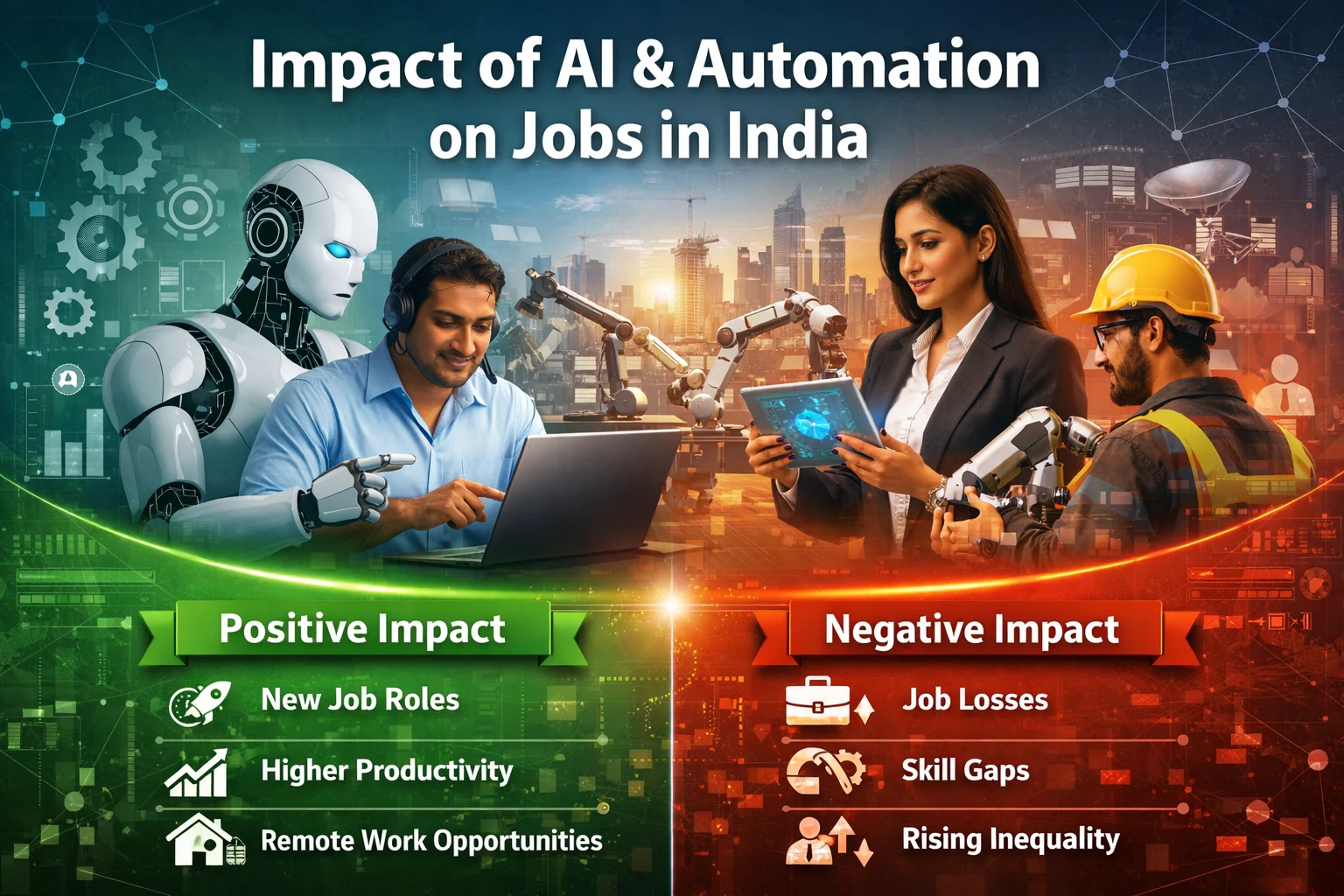
The Impact of AI and Automation on Jobs is no longer a future debate; it is a present-day reality shaping India’s employment outlook. From IT services and manufacturing to HR, finance, healthcare, and startups, the impact of AI and automation is transforming how work is done, who does it, and what skills truly matter. Artificial Intelligence and Jobs in India are deeply interconnected, influencing hiring patterns and career paths at every level.
For job seekers, the Impact of Artificial Intelligence on Jobs can feel exciting yet uncertain. For employers, the Impact of AI and Automation on Jobs presents opportunities alongside workforce challenges. Understanding the Impact of AI and Automation is critical for navigating India’s employment outlook in a rapidly evolving job market.
At Angel Jobs India, we believe the Impact of AI and Automation on Jobs is not about humans versus machines; instead, it is about humans working with intelligent systems. This balanced perspective guides how Angel Jobs India supports both job seekers and employers.
The Impact of AI and Automation on Jobs in India is growing across industries. The link between Artificial Intelligence and Jobs in India is reshaping hiring, work processes, and skill demand. Key examples of the Impact of AI and Automation include:
Therefore, the Impact of Artificial Intelligence on Jobs is changing job roles fast, reducing some traditional roles while creating new opportunities. This shows that the Impact of AI and Automation on Jobs has both positive and negative sides, and adapting is essential.
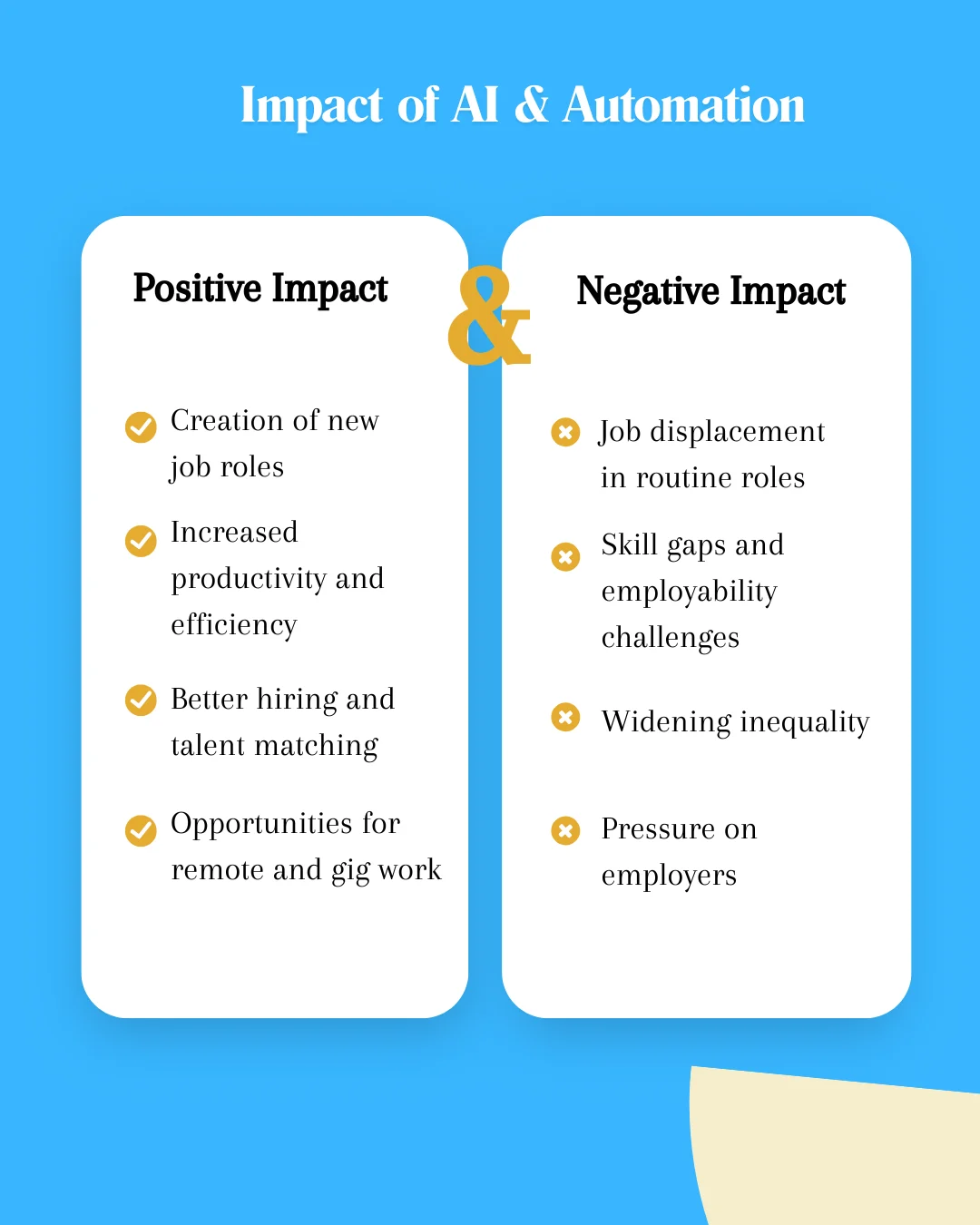
The positive impact of AI is often underestimated when people discuss the impact of AI and automation on jobs. In reality, AI is not eliminating work entirely. Instead, it is transforming job roles and changing how people work
Key areas of the Positive impact of AI include:
For job seekers who upskill and adapt, the Impact of Artificial Intelligence on Jobs can be empowering, clearly reflecting its positive impact on long-term career growth.
A realistic discussion of the impact of AI and automation on jobs must also consider the negative impact of AI. This is especially important in a diverse economy like India’s. While technological progress is necessary, the negative impact of AI creates real challenges for both workers and organisations.
Key concerns linked to the Negative Impact of AI include:
These realities show that India’s employment outlook depends not only on adopting AI but also on managing the Negative Impact of AI responsibly within workplaces.
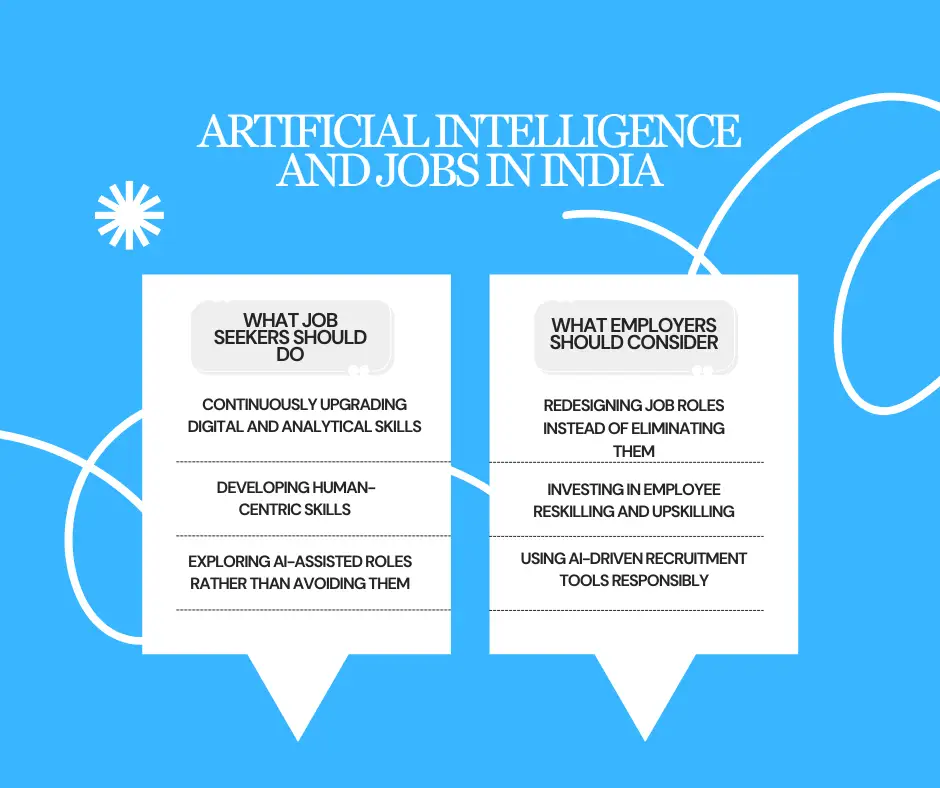
For job seekers, the conversation around Artificial Intelligence and Jobs in India is not about whether AI will affect careers, but how to remain relevant amid the Impact of AI and Automation on Jobs.
Practical steps include:
At Angel Jobs India, job seekers connect with employers who value future-ready skills over outdated job profiles.
For employers, the significant impact of AI and Automation on Jobs presents an opportunity to rethink workforce planning. Forward-thinking employers responding to the Impact of AI and Automation on Jobs are strengthening their workforce planning by:
While AI improves efficiency and supports smarter workforce planning, the Impact of Artificial Intelligence on Jobs reminds employers that human judgment, empathy, and leadership remain essential for building strong, resilient teams.
At Angel Jobs India, we understand the evolving relationship between Artificial Intelligence and Jobs in India. Angel Jobs India is designed to:
To know more about Angel Jobs India, visit our FAQs page
AI and automation are tools. How India manages the Impact of AI and Automation on Jobs will define India’s employment outlook for decades. With the right mindset, balanced adoption, and trusted platforms like Angel Jobs India, the future of work can be both innovative and human-centric.
Whether you are hiring talent or building your career, Angel Jobs India is here to help you succeed in an AI-driven world.